
AHCC® and immune support
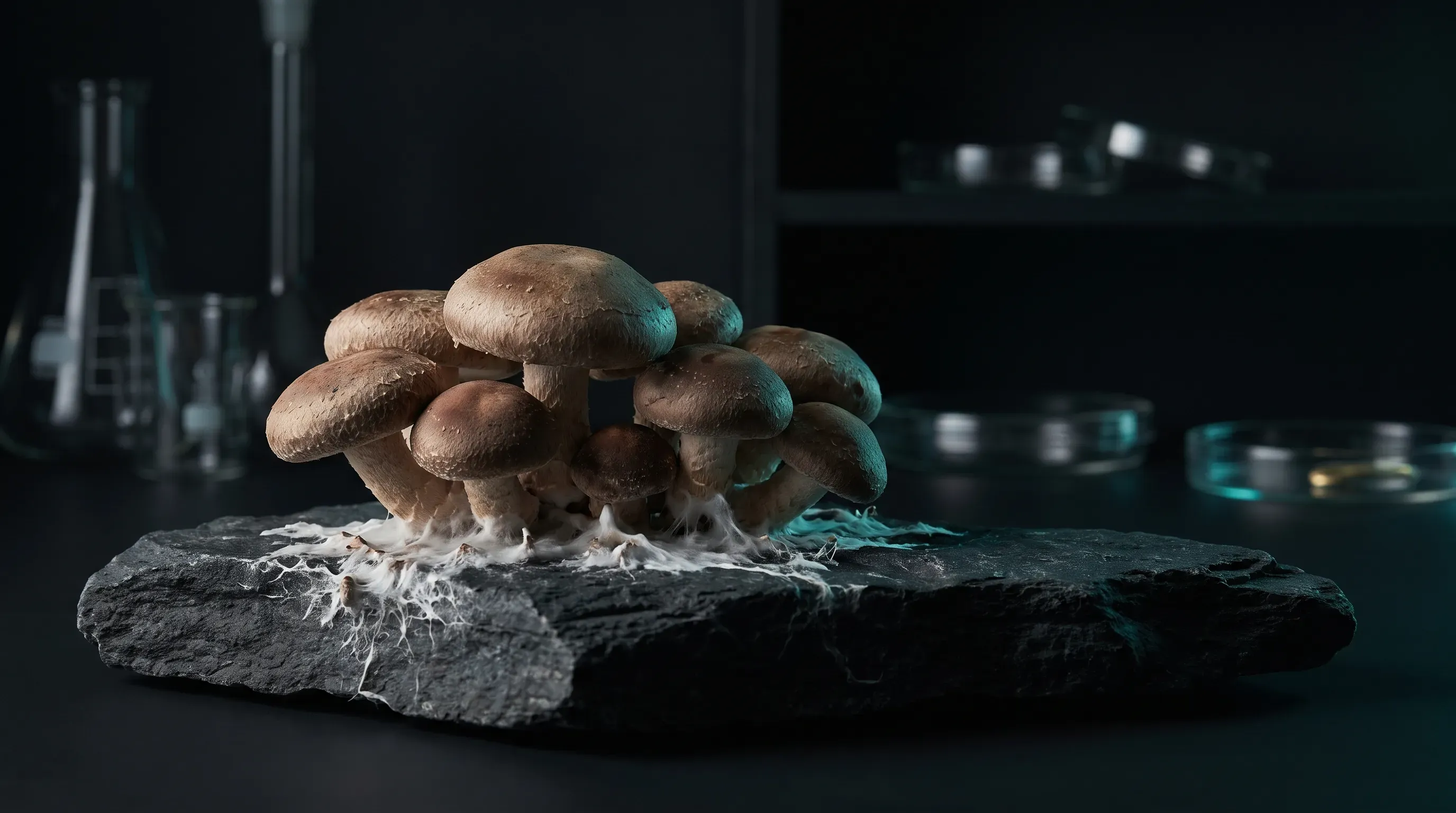
AHCC® is composed of active polysaccharides produced by Shiitake cells (Lentinula edodes) cultured in bioreactors, using a proprietary culture medium. AHCC® is produced by the Japanese company Amino Up Co. and studied for its effects on immune function. This article summarizes what the published research on AHCC® and immunity actually shows, how the ingredient is understood to work, and what European formulators may and may not claim on a product. VF Bioscience distributes AHCC® to food supplement, functional food and pharmaceutical manufacturers across Europe, and this overview is written for that professional audience, not as consumer health advice.
What is AHCC®?
Amino Up Co. developed AHCC® in the 1980s using a proprietary liquid-culture process, and the ingredient has been on the market since 1987, more than 35 years. Its defining feature is a fraction of low-molecular-weight, partially acylated alpha-1,4-glucans, which sets it apart from the beta-glucans of most other mushroom extracts.
A PubMed search for “AHCC®” or “active hexose correlated compound” returns more than 80 records as of mid-2026, making AHCC® one of the best clinically- and scientifically-validated nutraceutical ingredient on the market.
Is AHCC® an alpha-glucan or a beta-glucan?
The two are not interchangeable. The only beta-glucan health claim authorized in the EU concerns oat and barley beta-glucans and blood cholesterol, so it applies neither to AHCC®’s alpha-glucans nor to immune function.
How is AHCC® understood to interact with the immune system?
In laboratory and animal research, AHCC® acts first in the gut. Its low-molecular-weight alpha-glucans are absorbed from the intestine, where they interact with Toll-like receptors (TLR-2 and TLR-4) on epithelial and immune cells. Blocking those receptors reduces AHCC®’s signalling in cell and animal models (Mallet et al., European Journal of Nutrition, 2016; Daddaoua et al., Food Chemistry, 2013). These two studies come from independent academic groups, which is a useful cross-check on the manufacturer-affiliated literature.
The gut is a logical starting point. Gut-associated lymphoid tissue is often cited as holding close to 70% of the immune system and about 80% of the body’s plasma cells (Vighi et al., Clinical & Experimental Immunology, 2008). Reviews report that AHCC® modulates innate immune cells, including natural killer cells, dendritic cells and macrophages, and in turn adaptive responses through cytotoxic (CD8+) T-cells (Shin et al., 2019).
Is AHCC® safe, and what should formulators check?
AHCC® has a long safety record as a food supplement. It has been assessed in toxicity and human safety studies, and no serious adverse effects have been reported since its 1987 launch. It is generally well tolerated.
What can you legally claim about AHCC® in the EU?
In the EU you cannot make an immune health claim for AHCC® on a consumer product. No health claim for AHCC®, or for mushroom glucans in general, is authorized under Regulation (EC) No 1924/2006.
Authorized claims that a substance “contributes to the normal function of the immune system” exist only for specific vitamins and minerals, such as vitamin C, vitamin D, zinc and selenium. Botanical claims, including those for fungi, remain “on hold”, and after the Court of Justice ruling in case C-386/23 (April 2025) they may not be used in advertising while they are unauthorized (EU health claims).
A finished supplement that also contains, for example, vitamin C or zinc may carry the immune-function claim for that nutrient, never for AHCC® itself. Published AHCC® research supports technical and scientific communication to professionals, but for anything a consumer will read, confirm the wording with your regulatory lead.
How to source AHCC® as a standardized ingredient
Sourcing AHCC® means working with a single origin. Amino Up produces it in Sapporo, Japan, and VF Bioscience distributes the standardized ingredient to manufacturers across Europe. Manufacturers should be aware that some companies (mostly based in China) offer products that claim to be similar to AHCC®, and sometimes even use the name AHCC®, or a similar name. Using these counterfeit products infringes the manufacturer’s trademark, patent, and equates to consumer fraud, since the final customer is led to believe that the purchased product will have properties that are equivalent to the properties of the genuine product; however biochemical analyses of these fake products reveal a completely different composition, therefore the efficacy and safety of these products has never been demonstrated.
Frequently asked questions
What is AHCC® used for?
AHCC® is a standardized functional ingredient studied for immune support, used in food supplements and functional foods. VF Bioscience supplies AHCC® to manufacturers in the food, supplement and pharmaceutical sectors across Europe. It is an ingredient for formulators, not a finished consumer product.
Is AHCC® an alpha-glucan or a beta-glucan?
AHCC® is characterized by alpha-1,4-glucans, not the beta-glucans of most other mushroom extracts.
What are the known side effects of AHCC®?
AHCC® is well tolerated. According to the manufacturer, it has been assessed in safety studies with no serious adverse effects reported since its 1987 launch.
Can you make an immune claim for AHCC® in the EU?
No. No EU health claim is authorized for AHCC® or for mushroom glucans, and botanical claims remain on hold. Immune-function claims are authorized only for certain vitamins and minerals. VF Bioscience shares the published research with formulators as technical information, not as an on-pack consumer claim.
What is the regulatory status of AHCC® in the EU?
AHCC® is not a Novel Food. It was commercialized in EU countries before 1997, therefore it does not fall under the EU regulation 2015/2283 on Novel Food.
What AHCC® dose was used in the studies?
Human immune studies of AHCC® typically used 1 to 3 grams per day over several weeks.
Looking for the right strain or ingredient?
Our technical team can help you match biology to your application.
Talk to our team